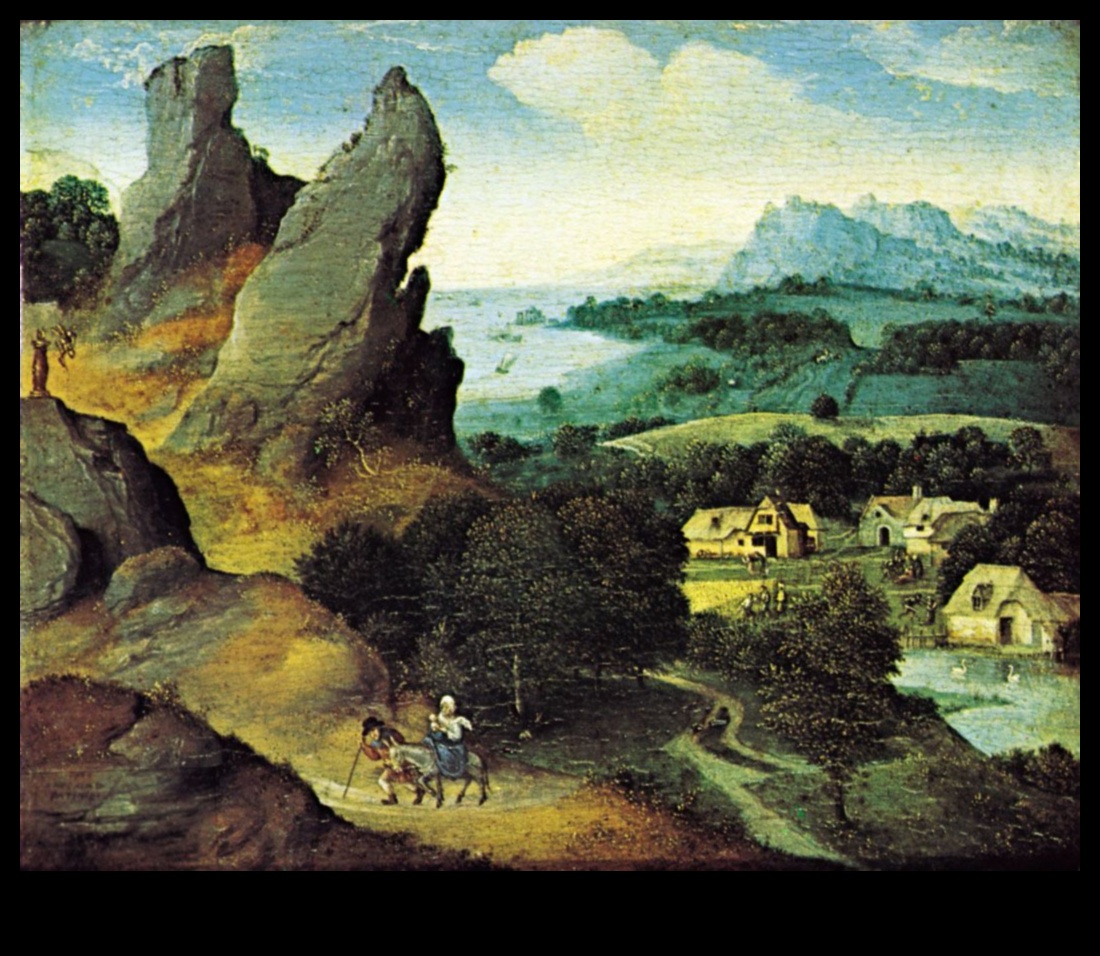
Atmospheric Perspective: Light and Distance in Landscape Art
Atmospheric perspective is a technique used in landscape art to create the illusion of depth by depicting objects that are farther away as being lighter, less saturated, and less detailed than objects that are closer to the viewer.
This effect is created by the fact that the atmosphere scatters light, so objects that are farther away appear to be shrouded in a haze of dust and moisture. This haze absorbs some of the light that reaches the objects, making them appear lighter and less saturated. The haze also blurs the details of objects, making them appear less distinct.
Atmospheric perspective is a powerful tool that can be used to create a sense of depth and realism in landscape paintings. By carefully controlling the amount of light, saturation, and detail in each object, artists can create the illusion that the viewer is looking into a deep, three-dimensional space.
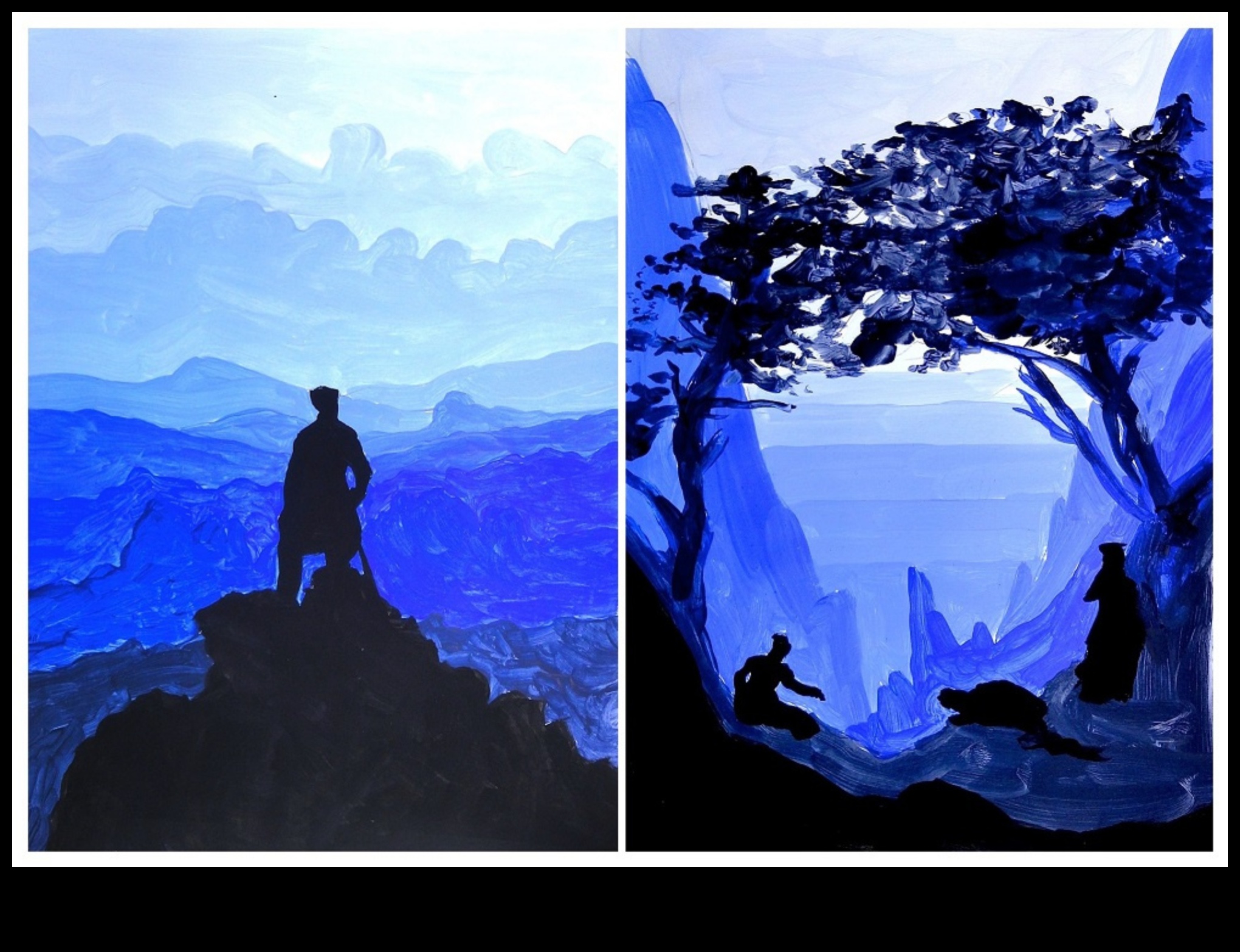
Elements of Atmospheric Perspective
There are three key elements of atmospheric perspective:
- Value: Objects that are farther away appear lighter than objects that are closer.
- Saturation: Objects that are farther away appear less saturated than objects that are closer.
- Detail: Objects that are farther away appear less detailed than objects that are closer.
These elements can be used together to create a convincing illusion of depth in a landscape painting. By carefully controlling the values, saturation, and detail of each object, artists can create a sense of space and distance that draws the viewer into the painting.
Atmospheric Perspective in Painting
Atmospheric perspective has been used by artists for centuries to create realistic and immersive landscape paintings. Some of the most famous examples of atmospheric perspective can be found in the works of the Italian Renaissance masters, such as Leonardo da Vinci and Raphael.
In his painting Mona Lisa, Leonardo da Vinci uses atmospheric perspective to create a sense of depth and mystery. The figure of Mona Lisa is depicted in sharp focus, while the background landscape is rendered in a more hazy and indistinct style. This creates the illusion that the viewer is looking into a deep, three-dimensional space.
Raphael also used atmospheric perspective to great effect in his painting The School of Athens. The painting depicts a group of philosophers and scholars gathered in a colonnade. The figures in the foreground are depicted in sharp focus, while the figures in the background are rendered in a more distant and hazy style. This creates the illusion that the viewer is looking into a vast, open space.
Atmospheric perspective is a powerful tool that can be used to create a sense of depth and realism in landscape paintings. By carefully controlling the values, saturation, and detail of each object, artists can create a convincing illusion of space and distance that draws the viewer into the painting.
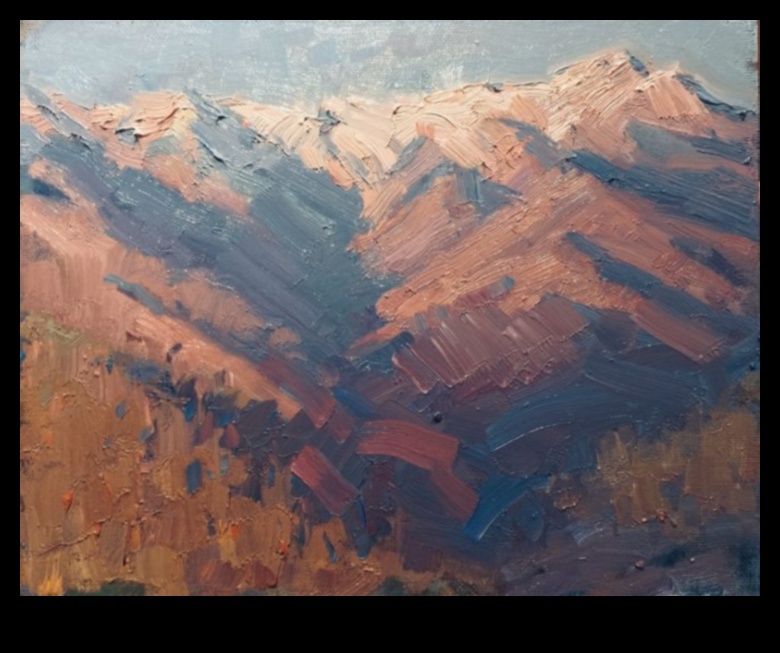
Atmospheric Perspective in Photography
Atmospheric perspective can also be used in photography to create the illusion of depth and distance. By using a long lens and a wide aperture, photographers can blur the background of their images, creating a sense of depth and space.
This technique is often used in landscape photography to create images that are both visually appealing and immersive. By blurring the background, photographers can draw the viewer’s attention to the foreground, creating a sense of focus and clarity.
Atmospheric perspective can also be used to create dramatic effects in photography. By using a low-angle shot and a wide aperture, photographers can create images that have a sense of mystery and intrigue.
Atmospheric perspective is a versatile tool that can be used to create a variety of effects in photography. By understanding how atmospheric perspective works, photographers can create images that are both visually appealing and visually interesting.
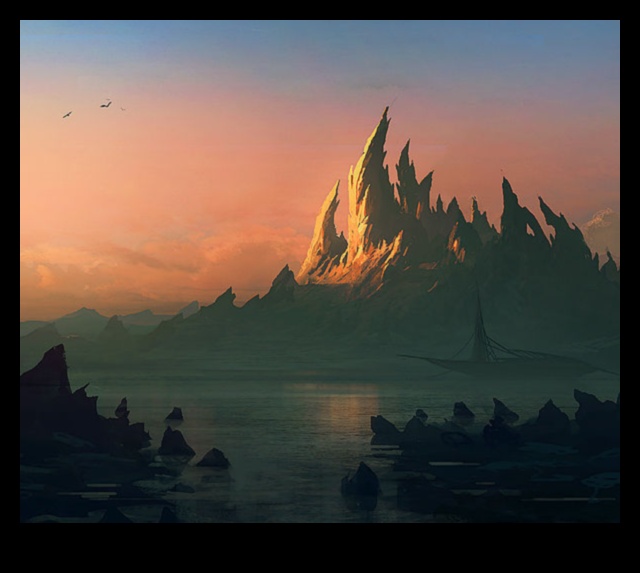
Atmospheric Perspective in Film
Atmospheric perspective can also be used in film to create the illusion of depth and distance. By using a deep focus lens and a wide aperture, filmmakers can create images that have a sense of space and realism.
This technique is often used in films that are set in outdoor environments, such as Westerns and war films. By blurring the background
| Topic | Answer |
|---|---|
| Atmosphere | The gaseous layer that surrounds the Earth |
| Landscape art | Art that depicts natural scenery |
| Light | Electromagnetic radiation that is visible to the human eye |
| Perspective | The way that objects appear to get smaller and less detailed as they get further away |
| Distance | The amount of space between two objects |
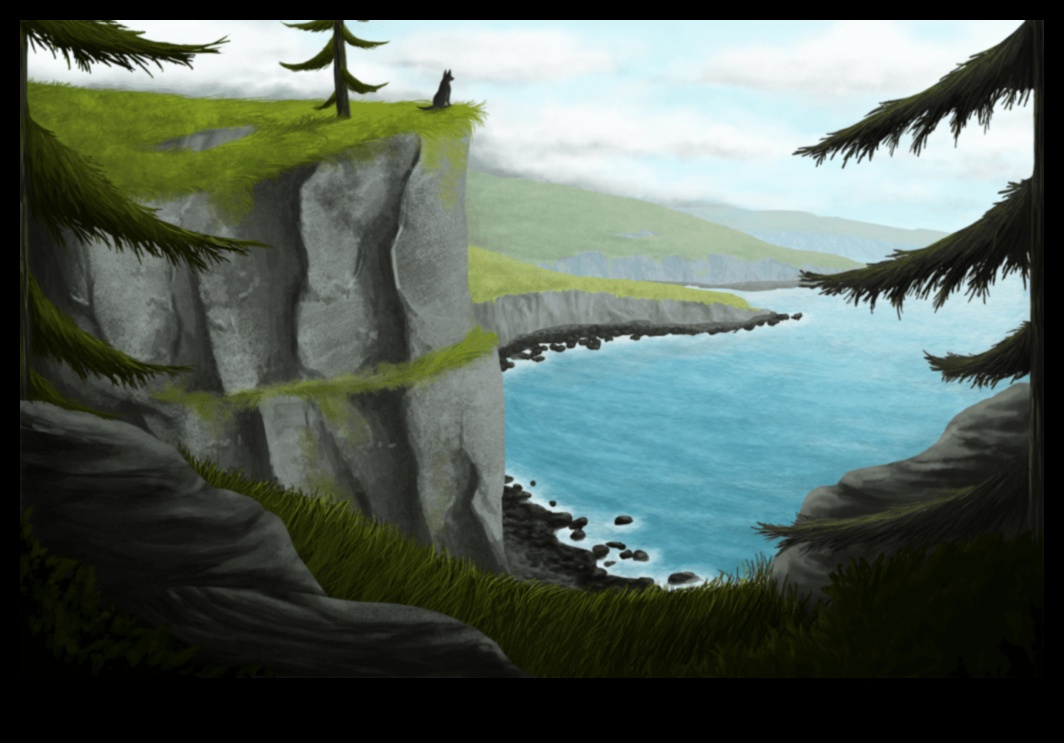
II. What is atmospheric perspective?
Atmospheric perspective is a technique used in painting to create the illusion of depth by depicting objects as less distinct and more faded as they recede into the distance. This is achieved by gradually decreasing the saturation, contrast, and detail of objects as they move away from the viewer. Atmospheric perspective can also be used to create the illusion of haze or fog, and to emphasize the scale of a landscape or scene.
Atmospheric perspective is a natural phenomenon that occurs as light travels through the atmosphere. As light travels through the atmosphere, it is scattered by particles in the air, such as dust and water vapor. This scattering causes objects to appear less distinct and more faded as they move away from the viewer.
Artists use atmospheric perspective to create the illusion of depth in their paintings. By gradually decreasing the saturation, contrast, and detail of objects as they move away from the viewer, they can create the illusion that the objects are receding into the distance. Atmospheric perspective can also be used to create the illusion of haze or fog, and to emphasize the scale of a landscape or scene.
III. How does atmospheric perspective work?
Atmospheric perspective is a technique used in painting to create the illusion of depth by using variations in color, value, and detail.
As objects in a landscape become more distant, they appear to be lighter in value and less saturated in color. This is because the atmosphere scatters blue light more than other colors, so distant objects appear to have a bluish haze.
In addition, distant objects appear to have less detail than closer objects. This is because the details of distant objects are obscured by the haze of the atmosphere.
By using these techniques, artists can create the illusion of depth in their paintings, even if the objects in the painting are not actually arranged in a deep space.
Atmospheric perspective is one of the most important techniques used in landscape painting, and it is essential for creating realistic and convincing landscapes.
IV. The elements of atmospheric perspective
The elements of atmospheric perspective are:
- Color
- Value
- Tone
- Texture
- Atmospheric haze
Each of these elements can be used to create the illusion of depth in a painting.
Color is one of the most important elements of atmospheric perspective. As objects recede into the distance, their colors become more muted and less saturated. This is because the atmosphere scatters the shorter wavelengths of light (blue and green) more than the longer wavelengths (red and orange). As a result, objects that are closer to the viewer appear to be brighter and more saturated, while objects that are farther away appear to be more muted and less saturated.
Value is another important element of atmospheric perspective. As objects recede into the distance, their values become lighter. This is because the atmosphere absorbs more light as it travels through it, so objects that are closer to the viewer appear to be brighter, while objects that are farther away appear to be darker.
Tone is the overall lightness or darkness of a color. As objects recede into the distance, their tones become cooler. This is because the atmosphere scatters the shorter wavelengths of light (blue and green) more than the longer wavelengths (red and orange). As a result, objects that are closer to the viewer appear to be warmer, while objects that are farther away appear to be cooler.
Texture is the way that a surface feels or looks. As objects recede into the distance, their textures become less distinct. This is because the atmosphere blurs the details of objects as they get farther away. As a result, objects that are closer to the viewer appear to have more detail, while objects that are farther away appear to have less detail.
Atmospheric haze is a thin layer of moisture and dust that hangs in the air. It can obscure distant objects and create the illusion of depth. As objects recede into the distance, they become more obscured by atmospheric haze. This is because the haze scatters light, making it more difficult to see objects that are far away.
V. Atmospheric perspective in painting
Atmospheric perspective is a technique used by painters to create the illusion of depth in their work. It is achieved by gradually decreasing the saturation and contrast of colors as they recede into the distance, and by blurring the edges of objects. This creates a sense of atmosphere and depth, and helps to draw the viewer’s eye into the painting.
There are a number of different techniques that painters can use to create atmospheric perspective. Some of the most common include:
- Using cooler colors for objects in the distance
- Using less saturated colors for objects in the distance
- Blurring the edges of objects in the distance
- Using atmospheric effects such as haze or fog
Atmospheric perspective can be used to create a variety of effects in paintings. It can be used to create a sense of distance and depth, to create a mood or atmosphere, or to focus attention on a particular object or area of the painting.
Here are some examples of how atmospheric perspective has been used in painting:
- In Claude Monet’s Haystack series, the artist uses atmospheric perspective to create a sense of depth and atmosphere. The haystacks in the foreground are rendered in bright, saturated colors, while the haystacks in the distance are rendered in cooler, more muted colors. The edges of the haystacks in the distance are also blurred, which helps to create a sense of distance.
- In Vincent van Gogh’s Starry Night, the artist uses atmospheric perspective to create a sense of drama and movement. The sky is rendered in swirling, turbulent clouds, and the stars are rendered as bright, glowing orbs. The edges of the clouds and stars are blurred, which helps to create a sense of movement and energy.
- In Edward Hopper’s Nighthawks, the artist uses atmospheric perspective to create a sense of isolation and loneliness. The diner is rendered in muted colors, and the only light comes from the streetlights and the diner’s sign. The edges of the diner and the streetlights are blurred, which helps to create a sense of distance and isolation.
Atmospheric perspective is a powerful tool that can be used to create a variety of effects in paintings. It can be used to create a sense of distance and depth, to create a mood or atmosphere, or to focus attention on a particular object or area of the painting.
VI. Atmospheric perspective in filmAtmospheric perspective is also used in film to create the illusion of depth and distance. In film, this is typically achieved by using a shallow depth of field, which means that only a small area of the image is in focus. This creates a sense of perspective, as the objects in the foreground appear closer to the viewer than the objects in the background.
Another way to create atmospheric perspective in film is to use lighting. By carefully controlling the direction and intensity of the light, filmmakers can create a sense of depth and distance. For example, a bright light shining from the front of the subject will create a strong sense of contrast between the foreground and background, while a soft light shining from the side will create a more subtle sense of perspective.
Finally, filmmakers can also use camera movement to create atmospheric perspective. By moving the camera closer to or further away from the subject, filmmakers can create a sense of depth and distance. For example, a slow zoom in on a subject will create a sense of anticipation and excitement, while a slow zoom out will create a sense of peace and tranquility.
VII. Atmospheric perspective in film
Atmospheric perspective is a common technique used in film to create the illusion of depth and distance. By gradually decreasing the saturation and contrast of objects as they recede into the background, filmmakers can create a sense of space and atmosphere. This technique can be used to great effect to create visually stunning and immersive landscapes.
One of the most famous examples of atmospheric perspective in film is the opening scene of the 1927 film Sunrise: A Song of Two Humans. In this scene, the camera pans across a vast landscape, gradually revealing the small town of Sunrise. As the camera moves closer to the town, the colors become more saturated and the contrast increases, creating a sense of depth and realism.
Atmospheric perspective can also be used to create more subtle effects. In the 1942 film Casablanca, for example, the filmmakers use atmospheric perspective to create a sense of isolation and loneliness. The film is set in a city that is shrouded in fog, and the muted colors and low contrast of the images create a sense of gloom and despair.
Atmospheric perspective is a powerful tool that can be used to create a variety of effects in film. By carefully controlling the saturation, contrast, and color temperature of the images, filmmakers can create a sense of depth, space, atmosphere, and emotion.
Atmospheric perspective in other art forms
Atmospheric perspective is a technique that can be used in any art form that involves depicting a scene outdoors. In addition to painting and photography, atmospheric perspective can also be used in film, sculpture, and architecture.
In film, atmospheric perspective can be used to create the illusion of depth and distance. This can be done by using different camera angles and lenses, as well as by manipulating the lighting and color palette.
In sculpture, atmospheric perspective can be used to create the illusion of space and volume. This can be done by using different materials and techniques, as well as by manipulating the scale and proportions of the sculpture.
In architecture, atmospheric perspective can be used to create the illusion of height and grandeur. This can be done by using different building materials and techniques, as well as by manipulating the scale and proportions of the building.
Atmospheric perspective is a powerful tool that can be used to create a sense of depth and realism in any art form. By understanding how atmospheric perspective works, artists can use it to create more effective and engaging works of art.
IX. The uses of atmospheric perspective
Atmospheric perspective can be used to create a variety of effects in art, including:
- Creating the illusion of depth
- Focusing attention on a particular object or area
- Creating a sense of atmosphere or mood
- Establishing a sense of scale
In landscape painting, atmospheric perspective is often used to create the illusion of depth by making objects in the distance appear hazy and blurred. This effect can be achieved by using a variety of techniques, such as:
- Using cooler colors for objects in the distance
- Applying less detail to objects in the distance
- Using a smaller brushstroke for objects in the distance
In addition to creating the illusion of depth, atmospheric perspective can also be used to focus attention on a particular object or area of the painting. This can be done by making the object or area appear more distinct and detailed than the surrounding objects. Atmospheric perspective can also be used to create a sense of atmosphere or mood by using different colors and brushstrokes to create a specific feeling. Finally, atmospheric perspective can be used to establish a sense of scale by making objects in the distance appear smaller than objects in the foreground.
Question and Answer
Q: What is atmospheric perspective?
A: Atmospheric perspective is a technique used in painting to create the illusion of depth by depicting objects that are farther away as being less distinct and more blurred. This is done by gradually decreasing the saturation, contrast, and detail of objects as they recede into the distance.
Q: How does atmospheric perspective work?
A: Atmospheric perspective works because of the way that light interacts with the atmosphere. As light travels through the atmosphere, it is scattered by particles of dust and water vapor. This causes objects that are farther away to appear less distinct and more blurred than objects that are closer.
Q: What are the elements of atmospheric perspective?
The elements of atmospheric perspective are:
- Value: The value of an object decreases as it recedes into the distance.
- Saturation: The saturation of an object decreases as it recedes into the distance.
- Contrast: The contrast of an object decreases as it recedes into the distance.
- Detail: The detail of an object decreases as it recedes into the distance.